


History
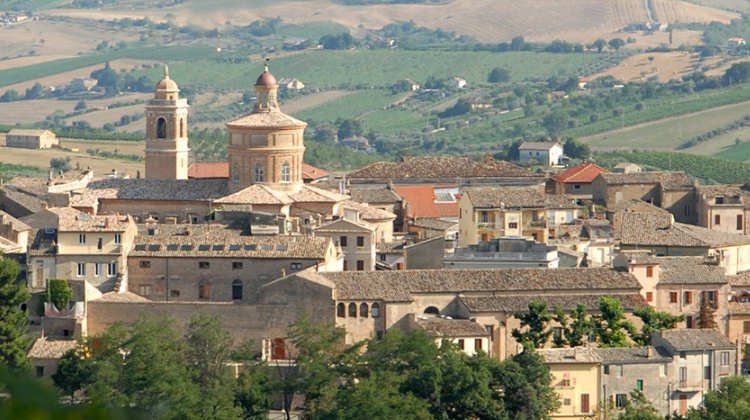
The discovery of a large number of recently unearthed necropolises suggests that Offida was founded during the Stone Age by the Pelasgians, who came from Asia Minor and were probably the first to bring signs of civilization to this area.
According to the historian G. Allevi, the people of the Pelasgians, great connoisseurs of iron, rich in amber, bronze and glass, moved from the East, and, after wandering the sea, landed on the Adriatic beach at the place where many centuries later the present Marano (Cupra M. – upper area) would rise. Other historians based on the fact that the term Ophis, in both Greek and Etruscan, has the same meaning, i.e., “snake,” argue that the true founders of the town would have been the Etruscans. The latter by many believed to be an oriental people, by others are to be regarded as a people originating in the Italian peninsula who, having come into contact with existing advanced civilizations, then achieved a high degree of civilization.
The town certainly experienced a great deal of turmoil during the Roman and Lombard ages as evidenced by several archaeological finds, now preserved and visible at the City Museum.
A significant change that improved economic and commercial conditions in the Offida area was brought about by the settlement of monks fleeing from Farfa.
Offida remained included in the munificent Presidate Farfense until 1572, when Pope Gregory XIII (1502-1585) entrusted it to the diocese of Ascoli. Meanwhile, Pope Nicholas IV (early 13th-1292), on February 18, 1291, had already granted some municipalities in the Marches, including that of Offida, the power to elect mayors, consuls and priors.
Over the following centuries, Offida, like other important municipalities in the Marches, became involved in the rivalries that ignited the feuds between the Guelphs and Ghibellines and between Ascoli and Fermo. These struggles lasted until the 16th century and saw Offida finally side with Fermo, against Ascoli.
On February 8, 1797, the French entered Ancona, on the 12th Macerata, and on the 13th Tolentino. On Feb. 28, Ascoli, occupied the previous year, was declared republican and, consequently, the end of all papal authority was decreed.
The following year, Marche was divided into three departments (rather large administrative territories):
– the department of the Metauro River (it originates from the Alpe della Luna, on the border with Tuscany, and flows into the Adriatic Sea, south of Fano) with its capital Ancona;
– the department of the Musone River (it rises from the S. Vicino group ‘mt. 1485’ and flows into the Adriatic Sea, near Porto Recanati) with Macerata as its capital;
– the department of the Tronto River (rises in the central Apennines, runs through Ascoli Piceno, and from there runs through a valley that, for several kilometers, marks the border between Marche and Abruzzo) with Fermo as its capital. Offida, therefore, is included in the department with Fermo as its capital.
The Royal Decree of December 22, 1860 established the new administrative division of the territory of the Marches. Four provinces were established: Pesaro-Urbino, Ancona, Macerata and Ascoli Piceno; the papal delegations of Camerino and Fermo were suppressed, and Offida was included in the province of Ascoli.
The town, meanwhile, had gone through a transition from a typically rural economy to a thriving cottage industry and in the last century, to an economy based on the processes of mechanization and industrialization.
Places of interest in Offida:
- The city walls 12th-15th centuries.
- Palazzo De Castellotti – Pagnanelli (1800) the palace also houses the “Archaeological Museum” G. Allevi “, the” Museum of Popular Traditions “and the Municipal Picture Gallery.
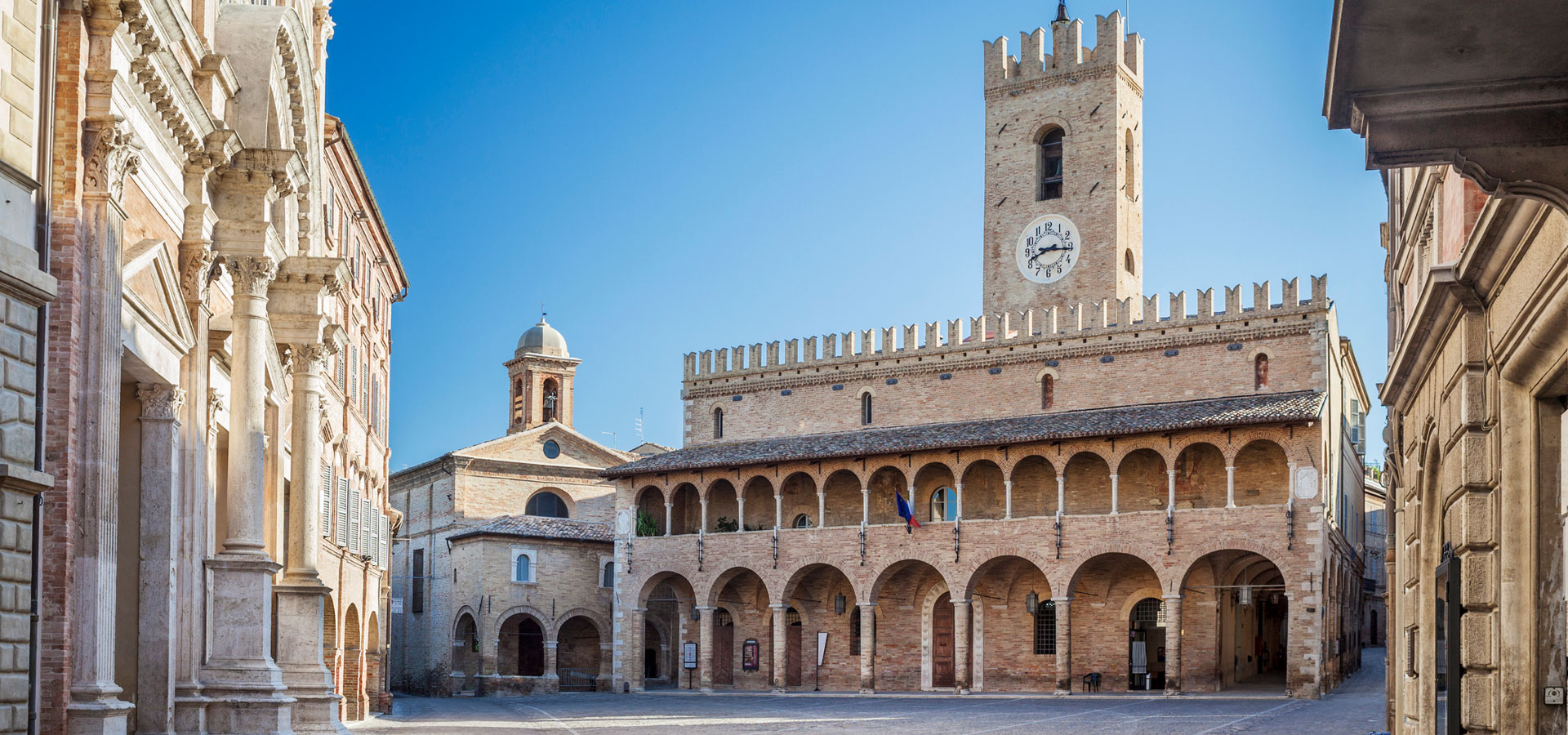
- People’s Square, with its unusual triangular shape, is the center of the city, the place where the most important events take place.
- Municipal Palace (City Hall),
- one of the best examples of 15th-century civic architecture in the Marche region. The building’s charming upper loggia and dovetailed battlements give the square a memorable feel.
Theater of the Golden Serpent
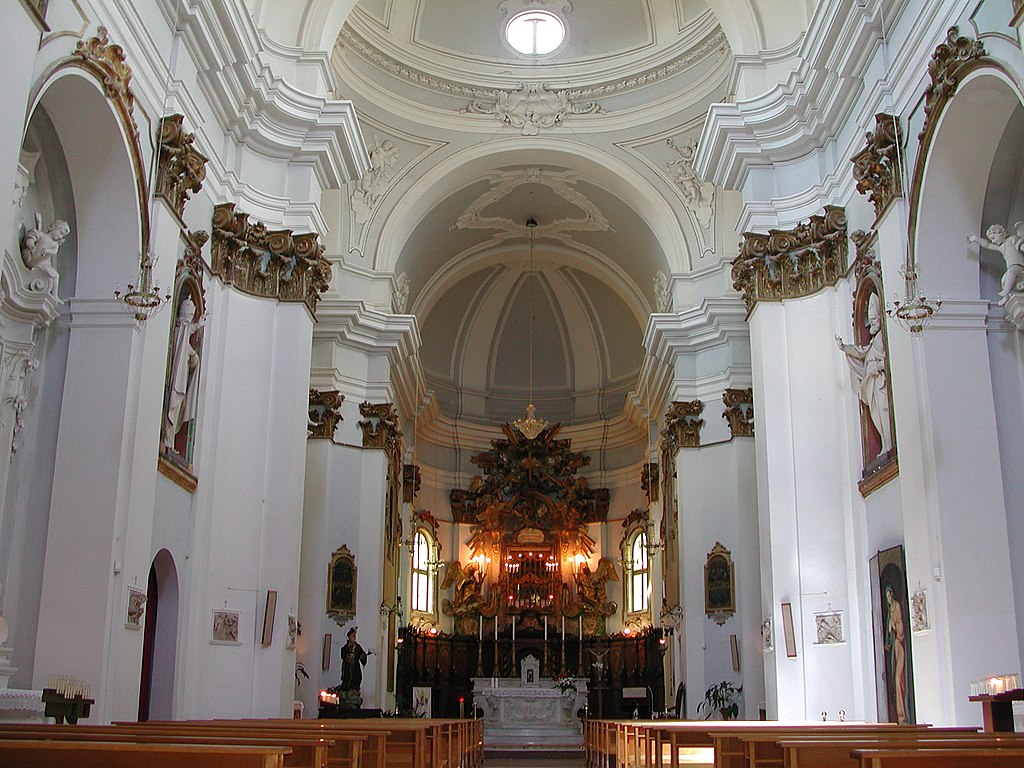
is a beautiful 18th-century theater decorated with gilded stucco and carvings- Collegiate Church (Chiesa), whose facade is a mixture of styles, the Church of Our Lady of Sorrows where the “Coffin” (as the canopied wagon where the statue of the dead Christ lies is commonly called) is kept, and the Augustine Church.home of the relics of the Eucharistic Miracle.
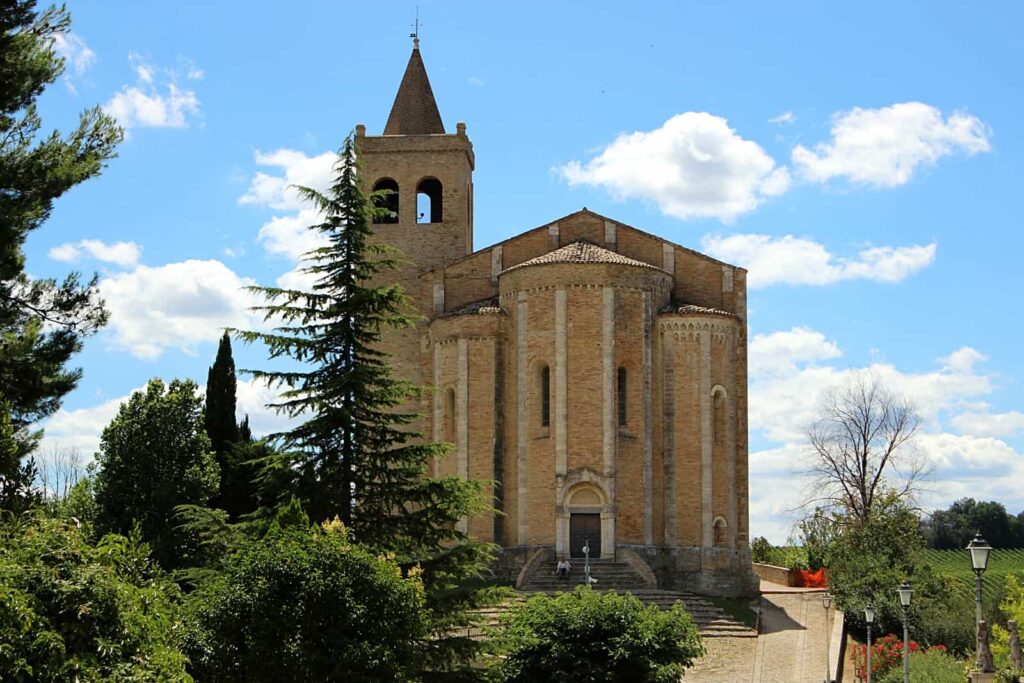
- The church of
Santa Maria della Rocca
not far from the main square. The Romanesque-Gothic church is one of the area’s most important examples of monastic art in the Picenum. The building initially erected as a Longobard castle, was later entrusted to the Abbey of Farfa around 1000. The present building dates back to 1330 and provides clear evidence of the peculiarities of the monastic style of the Picenum.
Offida’s most important events:
- Biennial fiction award -City of Offida Joyce Lussu literary prize reserved for short story collections
- Carnival (January, February) with many related events such as “lu Bove finte”
- Offida Festival, Festival of threshing, wild boar and other specialties (first week of July)
- Lace Week (July), workshops, competitions, conferences dedicated to the traditional art of bobbin lace making.
- “Gustandoffida” (July), food festival for the village streets.
- “Ciborghi d’Italia” (July), festival of local dishes
- Offida Opera Festival (September),
- DiVino in Vino (September), tastings and guided dinners
For more information on events and itineraries, visit the official website
Conditions of stay
Check In: from 8:00 a.m. to 10:00 p.m., always with prior notice to 349 1235286
Check Out: 11:00 am
By 11:00 a.m. you must vacate the room, but throughout the day you can use the outside common areas of the Bed & Breakfast